
Why Living Near the CTA Can Make Life Easier
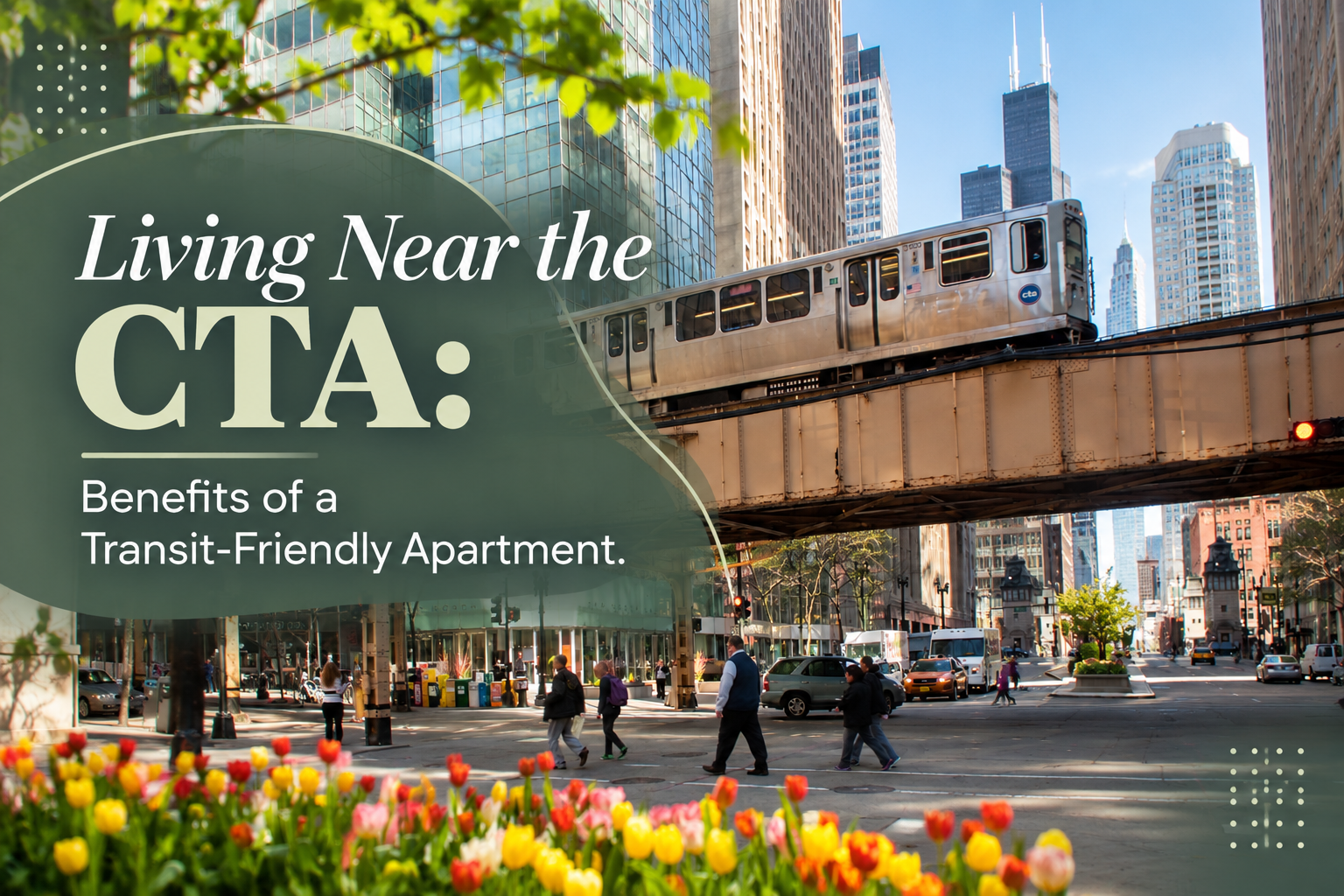
Picture a Chicago winter morning: snow is falling, traffic is crawling along the Kennedy Expressway, and every minute behind the wheel feels interminable. Now imagine walking a few blocks, stepping onto the train, and leaving the congestion behind.
If you are apartment hunting in the city, living near the CTA should be a top priority. A transit-friendly apartment can reduce transportation costs, simplify winter commutes, and give you more time to enjoy Chicago.
II. The True Cost of Car Ownership in Chicago
Owning a car in Chicago can be surprisingly expensive. Beyond a monthly payment, drivers must account for insurance, gasoline, maintenance, registration, the city sticker, and parking.
A CTA 30-day pass costs roughly $75, while a dedicated parking space can easily add $150–$300 or more per month. Once those expenses accumulate, car ownership becomes a substantial recurring obligation.
That is one reason apartments near the L can be so appealing. Eliminating a car—or using one far less frequently—could free up money for a larger apartment, dining, entertainment, or savings.
Chicago Commute Cost Calculator
Adjust your estimated car expenses to see how much you save by taking the CTA.
Total Monthly Savings:
$645
III. Reclaiming Your Time
Chicago traffic has a peculiar talent for turning a short journey into an endurance test. The CTA, by contrast, operates along dedicated rail infrastructure on many routes, allowing riders to bypass much of the street-level congestion.
A CTA commute can also become productive time. Read a book. Listen to a podcast. Answer emails. Simply stare out the window and let your brain decompress.
The difference is subtle but consequential: you arrive without having spent the entire journey gripping a steering wheel.
IV. Winter Convenience
Chicago winters are not merely cold; they can be obstinate. Snow, freezing temperatures, wind, and icy sidewalks can make commuting considerably more arduous.
Living within a few blocks of a CTA station reduces the amount of time spent outdoors waiting for transportation. Even better, there is no windshield to scrape, no driveway to shovel, and no snow-covered vehicle waiting in the morning.
For renters who dread winter driving, that convenience can be worth considerably more than it first appears.
V. Proximity vs. Noise: Finding the Sweet Spot
There is, however, a distinction between being near transit and being on top of it.
A practical sweet spot is often a five- to ten-minute walk from a station. You remain close enough for convenient daily access while gaining some separation from platform announcements, passing trains, traffic, and station activity.
Before signing a lease, visit the apartment at different times of day. Open the windows. Listen from the bedroom. Check whether the building has quality sound-insulating windows.
Transit access should make apartment living easier—not introduce a new source of daily cacophony.
Final Thoughts
For Chicago renters, location is about more than neighborhood prestige. It is about how effortlessly your home connects to the rest of the city.
A well-positioned apartment near the CTA can reduce transportation expenses, reclaim commuting hours, and make winter considerably more manageable. Sometimes, the most valuable amenity is not inside the apartment at all—it is the train waiting a few blocks away.